









Photo Credits: Ally McLaren
Today marks the tenth anniversary of International Working Animal Day, a day dedicated to recognising the essential yet often overlooked contribution of working animals to communities worldwide.
Working Animals International founded the day in 2016 to shine a spotlight on the role of working donkeys, horses, mules, camels, oxen and other animals in helping millions of people earn a living, access food and water and reach hospitals and schools.
Patience, a donkey owner from the Chivi district in southern Zimbabwe, has experienced first-hand how working animals can provide access to healthcare. She said:
“When I was ready to give birth, I took the donkey cart and went all the way to the hospital. If someone is sick or injured, we can use the donkeys to get to the hospital.”
There are an estimated 200 million working horses, donkeys and mules globally, and no figures for working animals more broadly (1). Working animals support countless people, yet their critical role is often unrecognised.
During crises such as droughts, floods and other climate-related disasters, these animals are often among the last to receive help.
There is also a lack of awareness of their importance in Australia, even though they still play a crucial role in rural life, with horses used to muster cattle and working dogs supporting farms A recent poll commissioned by Working Animals International found that more than a third (34%) of Australians think working animals are a thing of the past (2).
Working animals are also often absent from national data and decision-making, making it difficult to fully understand their contribution and address their welfare needs.
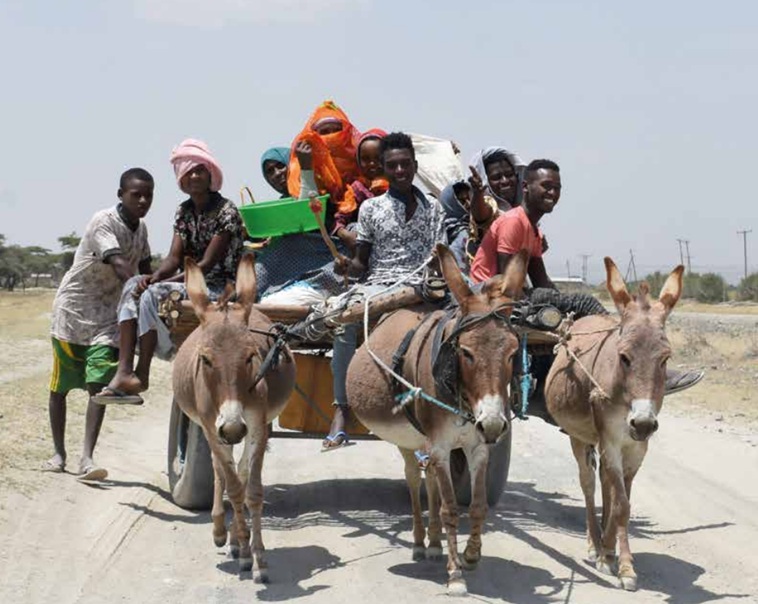
Photo Credits: Ally McLaren
Kerin Welford, Chair of Working Animals International Australia, said:
“Working animals are an essential part of so many communities. When they are not counted, their needs cannot be fully considered in critical areas such as veterinary services, infrastructure planning, climate resilience and disaster preparedness. The consequences are felt not only by the animals, but also by the people whose lives and incomes depend on them.”
Including working animals in national censuses is a simple but powerful way for governments to recognise their value and ensure they are considered in policy and planning (3). It’s a view supported by public opinion, with 68 per cent of Australians believing it is important to have a record of how many working animals exist worldwide (4).
Thanks to the advocacy work of Working Animals International, working animals were included in Mauritania’s national census for the first time in 2025.
Bebaha Hmeiditt, Country Director for Working Animals International’s programme in Mauritania, said:
“The inclusion of working animals in Mauritania’s national census is an important step forward. When working animals are counted, they are more likely to be recognised in decisions that affect them.”
Working Animals International supports working animals and the communities who depend on them through conflict, climate crises and natural disasters. The charity increases access to quality veterinary services, helps owners build the skills and knowledge to care for their animals, and campaigns for global policy change to create lasting improvements in animal welfare.
The charity recently rebranded from SPANA to Working Animals International. The new name more clearly reflects its global mission to support working animals and the communities that depend on them.