

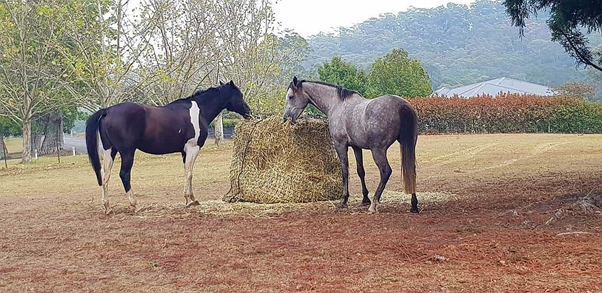
Pasture and hay are the main types of forage/fibre that are VERY important to the healthy digestion of all horses, ponies and livestock. We should all know that horses in a natural environment would be eating for 16 to 20 hours each day.
My son, Tully owns “Honey”, a 10-year-old 9hh mini-pony he drives in harness. Tully was awarded the 2019 Junior Driver of the Year by the Australian Carriage Driving Society.
A widely-used and popular phrase is that ‘feeding horses is both an art and a science’. The science underpins the formulation of a ration and the art is adjusting this ration to best fit the circumstances of an individual horse. There is not one correct way to feed any horse.
Choke is a not so uncommon problem in horses, and can lead to devastating consequences, so it is a condition that owners and trainers need to become educated about.
Flatulence – a word that across all ages, languages and countries has a unique and powerful ability to provoke laughter. Known by many other terms, flatulence is a build-up of gas in the digestive system that can lead to abdominal discomfort.
An acupuncturist talks about his experiences and gives some explanation on how acupuncture works with horses.
The most common causes of feed-related poisoning in horses are bacteria, moulds (which produce mycotoxins) and plants – the most common of these are the mycotoxins produced by moulds.
Nothing is more devastating than going to the effort of getting your mare in foal , seeing that belly grow and then having your mare abort with only a couple of months pregnancy to go.
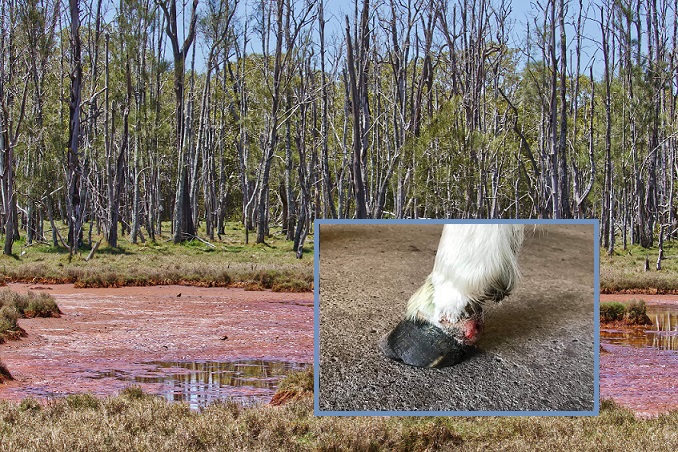
There can’t be many horse owners up the East coast of Australia who have not had to do battle at some point with seedy toe (white line disease) and thrush. Both conditions, caused by invasion of the hoof structure by bacteria or fungi, are rife in humid conditions
Colic is one of the most feared digestive disorders in horses. There are many horse owners that experienced first-hand or know of a horse that suffered or even died of colic.
One of the most frustrating things for an owner can be to have a horse who windsucks. Known variously as a habit, vice or stereotypy, windsucking is all the more problematic because there is no single remedial approach that works for all horses.
The first person to tell me about the effectiveness of the white sap of Euphorbia peplus was my late father-in-law, the well known plant pathologist Professor Neville White.
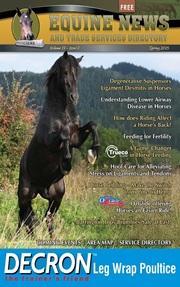
A website designed to compliment our hard copy magazine and to make information available at your fingertips
LOOKING for a service provider in the equine industry? Coming Event, Clinic or Classified FIND IT HERE! – Equine News And Trade Services Directory