








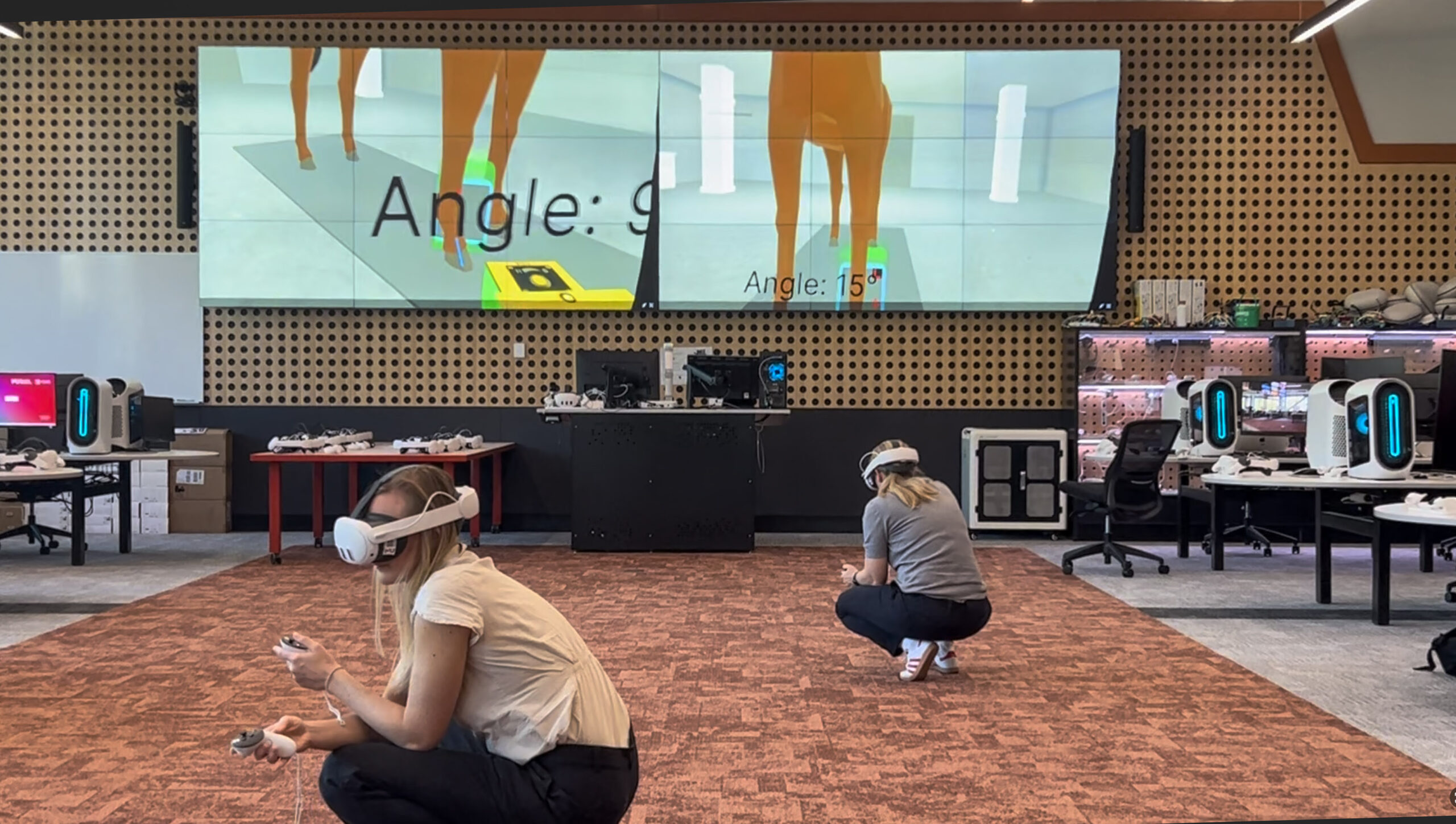
Murdoch University is transforming how future veterinarians learn high-risk clinical skills with a new equine radiography immersive virtual reality (VR) tool which allows students to safely master complex radiography procedures in a safe environment.
Lameness is one of the most common issues in equine practice, where horses present abnormal posture or movement while walking, trotting or cantering.
It is often caused by musculoskeletal pain — in their bones, joints, tendons and muscles.
To treat the condition, veterinarians need to be competent in performing a full lameness examination, which can involve the complex process of radiographing horses’ legs.
“Becoming competent in equine limb radiography requires repeated practice with careful detector plate positioning, correct use of the x-ray generator and close attention to safety for both people and horses,” said Lecturer in Clinical Skills Development, Dr Annett Annandale.
Becoming competent in this procedure requires repeated practice, however, students traditionally face limited opportunities to test these skills due to radiation safety regulatory constraints and limitations on access to live horses.
These challenges drove the development of the new VR technology, a collaborative project from the School of Veterinary Medicine and the School of Information Technology.
“Students often don’t get enough hands-on practice before entering real clinical settings,” said Dr Josie Faulkner, Senior Lecturer in the School of Veterinary Medicine, and specialist veterinary radiologist.
“Horses are large and can be reactive animals, and so safe procedures need to be followed to minimise the risk of injuries for students, staff, and the horse itself,” she said.
“Poor technique can also result in poor quality images and unnecessary radiation exposure, which not only compromise diagnostic accuracy but require repeat imaging — increasing stress and danger for everyone involved.”
“This VR environment lets students refine these skills safely, repeatedly and without the risks associated with working around a 500kilogram live horse.”
The Equine Radiography VR features both practice and assessment modes, providing immediate feedback to help students build confidence and proficiency before handling real horses.
“The VR horse even kicks out if user is in the danger zone directly behind the horse, which will help students learn the necessary safety precautions involved in the procedure,” Dr Faulkner said.
The tool will be introduced into fourth year veterinary teaching for the first time in 2026.
School of IT students played a pivotal role in developing the technology as part of their third-year units.
Lecturer in Information Technology Robert Herne, who supervised the student development teams, said the project showcases the university’s commitment to experiential learning and gamified educational design.
“Our students first created the prototype in ICT367, and then a second team refined and expanded it in ICT302, our IT capstone unit,” he said.
“This project is part of a broader initiative exploring the gamification of teaching and healthcare programs, all developed using Unity and Meta Quest VR headsets.
The VR tool is one of several emerging projects from Murdoch’s IT programs that blend interactive design, spatial computing and educational innovation.
“The combined expertise of IT and veterinary science staff and students has resulted in a unique tool that is not commercially available elsewhere,” Dr Herne said.
The project was supported by Murdoch University’s Immersive Learning Technologies team, which helps academics integrate VR and extended reality (XR) into teaching through Digital Immersive Labs.
“A key part of our role is connecting academics with the right development opportunities and supporting the deployment of VR and XR solutions in teaching spaces like the DigiLab,” said Martin Hill, Senior Coordinator, Immersive Learning Technologies.
“It’s been fantastic to support Dr Annandale’s and Dr Faulkner’s VR equine radiography project and link them with Dr Herne and his IT students to bring this learning experience to life.”